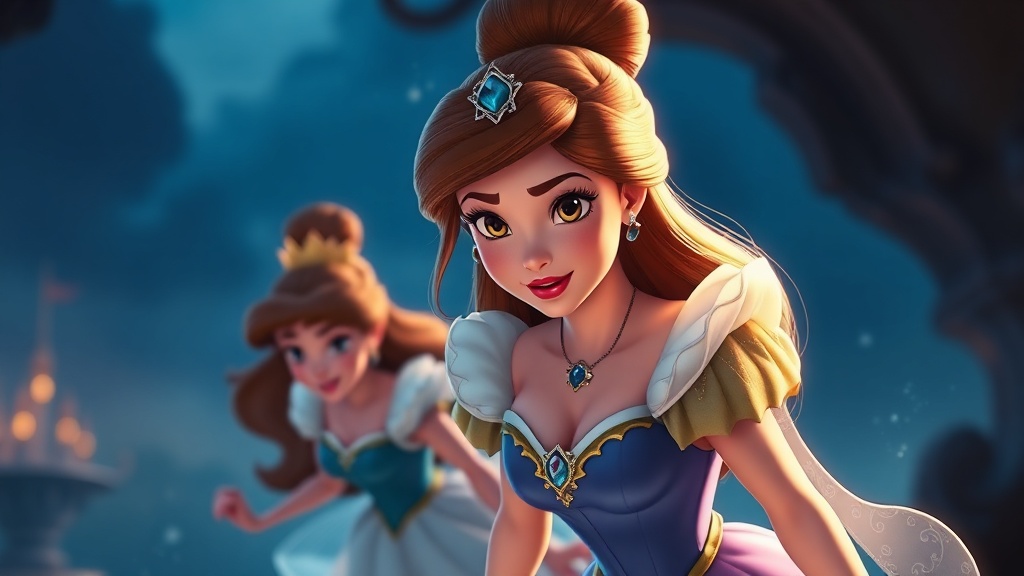
6 Disney Princesses Who Redefined Bravery

Mulan and the Courage of Sacrifice
Moana and the Bravery of Exploration
Merida and the Strength of Independence
Belle and the Courage to Be Different
Rapunzel and the Bravery of Stepping Out
Tiana and the Resilience of Hard Work
Understanding the Evolution of Courage in Disney Animation
This article examines six Disney Princesses who redefined the concept of bravery by shifting the narrative from physical combat to emotional intelligence, systemic defiance, and psychological resilience. You will learn how these characters moved beyond the traditional "damsel in distress" trope to showcase different, more nuanced forms of courage that resonate with modern audiences. Understanding these character archetypes helps fans appreciate the deeper storytelling techniques used by Disney's writers and animators to evolve their IP for new generations.
The definition of a "hero" has undergone a significant shift in the Disney canon. While early protagonists often relied on external forces or luck, modern princesses utilize internal strength and strategic decision-making. This evolution is a key component of the evolution of Disney animation styles and storytelling depth, moving from simple archetypes to complex, multi-dimensional women.
1. Mulan: The Bravery of Defying Social Norms
Mulan represents a pivotal moment in Disney history where bravery was defined by the subversion of societal expectations. Her courage is not merely found in her ability to wield a sword or survive a battlefield, but in her decision to break the rigid patriarchal structures of her culture. To join the army, she had to commit an act of treason, a high-stakes risk that carried the threat of death for both herself and her family.
Mulan’s bravery is tactical and sacrificial. She understands that the traditional path—the Matchmaker and a quiet domestic life—is a falsehood that ignores her true capabilities. Her strength lies in her ability to adapt. She uses her intellect to identify the threat of the Huns and her physical training to survive. This type of bravery is about identity; it is the courage to be seen for who you actually are, even when the entire world is demanding you be someone else.
2. Belle: The Bravery of Intellectual Isolation
Belle’s courage is often underestimated because it does not involve a physical battle. Instead, her bravery is rooted in her intellectual and social autonomy. In a small provincial town where being "odd" is a social liability, Belle chooses to remain unapologetically herself. She prioritizes her love for literature and her desire for a life beyond the mundane over the social acceptance offered by Gaston.
Her most significant act of bravery occurs when she enters the Beast's castle. This is a calculated risk driven by love for her father, but it also requires a profound level of emotional courage. She enters a space of genuine danger and chooses to look past a monstrous exterior to find the humanity within. Belle demonstrates that bravery can be found in the willingness to look deeper into a person or a situation than the surface-level fear allows. She refuses to be intimidated by the Beast’s temper, establishing a dynamic of mutual respect rather than one of fear-based submission.
3. Moana: The Bravery of Navigating the Unknown
Moana’s journey is a masterclass in the bravery of wayfinding. Unlike previous princesses who might be fleeing a situation, Moana is actively seeking out a solution to a systemic problem: the dying ecosystem of her island. Her courage is a combination of physical endurance—navigating the open ocean—and the psychological strength to challenge the traditional boundaries set by her father, Chief Tui.
The bravery of wayfinding is about the willingness to face the unknown. Moana must navigate through literal storms and psychological doubt. She faces the goddess Te Fiti/Te Kā, a being of immense power, not with a weapon, but with empathy and understanding. This marks a shift in Disney's definition of heroism: the bravest thing you can do is not to destroy your enemy, but to understand the trauma that created them. Moana’s bravery is found in her ability to lead her people toward a new future by embracing the very ocean her culture had been taught to fear.
4. Merida: The Bravery of Owning Mistakes
In Brave, the conflict is not an external villain, but an internal mistake. Merida’s bravery is unique because it involves the courage to face the consequences of her own impulsivity. Her initial act of "bravery"—challenging her mother’s wishes and meddling with the Will o' the Wisps—is actually an act of rebellion that results in a catastrophic transformation for her mother.
True bravery for Merida is the transition from teenage rebellion to mature accountability. It takes immense strength to admit that your quest for "freedom" caused harm to those you love. Her journey involves the difficult work of mending a fractured relationship and learning that autonomy does not mean a lack of connection. Merida redefines bravery as the ability to sit in the discomfort of a mistake, apologize sincerely, and work tirelessly to fix the damage caused. This is a psychological bravery that many viewers find much more relatable than the typical "hero vs. monster" narrative.
5. Elsa: The Bravery of Self-Acceptance
Elsa’s arc is perhaps the most profound exploration of psychological bravery in the Disney Princess lineup. For much of her life, her bravery was defined by suppression—the "conceal, don't feel" mantra. She believed that being brave meant hiding her true nature to protect others. However, the narrative arc of Frozen reveals that this was actually a form of fear-based avoidance.
Elsa’s true moment of bravery occurs when she stops running and embraces her power. This is the bravery of vulnerability. To be "brave" in Elsa's world is to stop apologizing for your existence and to stop letting fear dictate your boundaries. Her journey is an internal one; she has to navigate the isolation that comes with being "different" and find the strength to be a leader despite her insecurities. This shift from a defensive posture to an assertive one is a powerful metaphor for the courage required to live authentically in a world that may not understand your unique abilities.
6. Rapunzel: The Bravery of Stepping Out of the Comfort Zone
Rapunzel’s bravery is found in the transition from a controlled environment to an unpredictable one. For eighteen years, her world was defined by the walls of a tower and the strict rules of Mother Gothel. Her courage is not found in a grand battle, but in the thousands of small decisions to say "yes" to the unknown. Every step she takes outside that tower is a rejection of the safety that was actually a prison.
She demonstrates the bravery of curiosity. While many characters are driven by a desire to defeat a foe, Rapunzel is driven by a desire to experience life. This requires a specific kind of courage: the willingness to be a novice. She enters the world with no experience, no combat training, and no social skills, yet she faces the world with an infectious optimism. Her bravery is the refusal to let fear of the unknown dampen her spirit, proving that the greatest adventure is often just the act of leaving your comfort zone.
The Impact of Redefined Bravery on Modern Storytelling
These six characters demonstrate that Disney has successfully moved past the one-dimensional "heroine" to create characters that reflect the complexities of real-world resilience. Whether it is the social defiance of Mulan, the intellectual independence of Belle, or the emotional vulnerability of Elsa, these princesses offer different models of what it means to be strong.
For fans and collectors alike, these characters offer more than just aesthetic appeal; they provide a blueprint for different types of strength. When you are curating a collection or even designing a Disney-inspired space, understanding these nuances allows you to connect more deeply with the media you love. Bravery, in the modern Disney era, is no longer just about the sword; it is about the heart, the mind, and the courage to be oneself.