7 Disney Villains Who Deserved a Better Story

The Tragedy of Maleficent
Ursula's Ambition and Power
Scar's Struggle for Recognition
Cruella's Obsession with Status
Hades and the Underworld Politics
The Shadow of Gaston's Ego
Mother Gothel's Fear of Aging
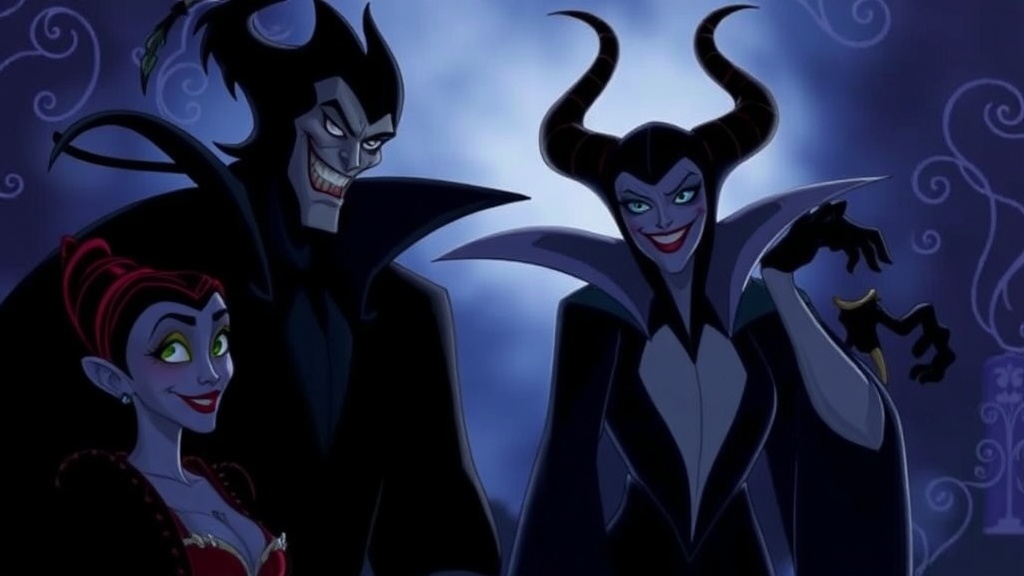
The flickering green light of Maleficent’s staff casts long, jagged shadows against the stone walls of a high mountain fortress. It’s a visual cue that signals danger, but in the world of classic Disney animation, it also signals a missed opportunity for depth. We often treat Disney villains as one-dimensional obstacles—monsters to be defeated so the hero can win—but a closer look reveals characters with motives that actually make sense. This list examines seven iconic antagonists whose stories felt unfinished or lacked the nuance their potential deserved.
Why do we love Disney villains so much?
We gravitate toward Disney villains because they often possess more personality, sharper wit, and clearer motivations than the protagonists themselves. While the heroes are busy being "good," the villains are usually the ones driving the plot forward with high stakes and high drama. They represent the friction necessary for a story to actually work.
Take Ursula, for example. She isn't just a sea witch; she's a legalistic trickster who uses contracts to get what she wants. There’s a layer of political maneuvering there that the movie barely scratches. If we look at the character of Ursula through a modern lens, she feels less like a monster and more like a disenfranchised ruler reclaiming power. It’s a nuance that makes her far more interesting than a simple "bad guy."
1. Maleficent: The Missing Origin Story
Maleficent is perhaps the most striking example of a character who deserved a deeper dive into her psyche. In the original 1959 Sleeping Beauty, she is a force of nature—pure, unadulterated spite. She’s insulted because she wasn't invited to a party, which is a classic fairy tale trope, but it lacks the emotional weight we expect from a high-fantasy antagonist.
The problem? The "why" is too thin. A character with that much power and presence deserves a reason for her bitterness that goes beyond a social slight. We see this later addressed in the live-action re-imaginings, but in the context of the original film, she remains a striking silhouette without a heart.
2. Scar: The Political Outsider
Scar is a masterclass in charisma, but his internal struggle is largely left to the imagination. He’s the "second son" in a kingdom that values brawn over intellect, yet his resentment feels a bit surface-level. He doesn't just want the throne; he wants to dismantle the very system that sidelined him.
The tension between him and Mufasa could have been a much more complex political drama. Instead, it's a quick descent into madness and hyena-fueled chaos. It’s a shame because his ability to manipulate the hierarchy of the Pride Lands is a skill that deserved more screen time.
3. Hades: The Underworld Bureaucrat
Hades is arguably the funniest character in the Disney canon. His fast-talking, fast-paced energy is perfect, but his ultimate goal is a bit... thin? He wants to overthrow Zeus and rule the heavens, but the stakes feel more like a petty sibling rivalry than a cosmic upheaval.
He functions as a cosmic bureaucrat, stuck in a job he hates, trying to climb the ladder. If the story had leaned harder into the "corporate ladder" of the gods, his character would have been legendary. It’s a missed chance to explore the hierarchy of Olympus through a comedic, cynical lens.
| Villain | Primary Motivation | The "Missing" Layer |
|---|---|---|
| Maleficent | Spite/Revenge | The emotional root of her isolation |
| Scar | Power/Status | The systemic rejection of his intellect |
| Hades | Ambition | The bureaucracy of the afterlife |
| Ursula | Control | The legal/political way she uses contracts |
4. Mother Gothel: The Psychological Manipulator
Mother Gothel is terrifying because she is grounded in reality. She isn't a dragon or a sea witch; she’s a gaslighter. Her "love" for Rapunzel is a twisted version of protection, and that is deeply unsettling. However, the film doesn't quite dive deep enough into the *why* of her obsession with the flower's magic.
Is it just about staying young? Or is it a deeper, more primal fear of death? We see the symptoms of her behavior, but the psychological depth of her obsession remains a mystery. This makes her a great villain, but a character that could have been a psychological masterpiece.
5. Gaston: The Social Pariah in Plain Sight
Gaston is the ultimate "alpha" archetype, but he’s also a cautionary tale about the dangers of unchecked ego. He is the man everyone loves, which makes his descent into villainy even more jarring. He isn't just a hunter; he's a man who uses his popularity as a weapon.
The story focuses heavily on his physical prowess, but it ignores the social mechanics of how he keeps the town under his thumb. He’s a master of public opinion. A story that explored his rise to local fame would have made his eventual fall even more satisfying. It’s a fascinating look at how charisma can be used to mask a lack of substance.
6. Dr. Facilier: The Man with a Debt
The Shadow Man is a visual masterpiece. The way his shadow moves, the way the colors of New Orleans bleed into the darkness—it’s incredible. But his debt to the "Friends on the Other Side" is a ticking time bomb that never quite explodes the way it should.
We see him working a job, but we don't see the weight of the supernatural contract he's navigating. He’s a man playing a dangerous game with forces he can't control, and that tension is a goldmine for storytelling. The movie treats him as a standard magical antagonist rather than a desperate man caught in a cosmic trap.
7. Ursula: The Contractualist
Ursula is a master of the "fine print." She is a character who understands that power isn't just about magic; it's about the law. She uses the rules of the sea to her advantage, making her much more dangerous than a simple brute.
The tragedy of Ariel's deal is that it's a legal one. If the story had explored the social standing of sea creatures or the legalities of the ocean's hierarchy, Ursula would have been an even more formidable opponent. She represents the systemic barriers that even magic can't always break.
When we look back at these characters, it's easy to see how a little more context could have changed everything. They aren't just bad guys to be beaten; they are complex figures who were often just one good script away from being the protagonist of their own tragic tales. If you're looking to dive deeper into how animation-style and character archetypes have changed over the decades, you might enjoy exploring the evolution of Disney animation styles.
The beauty of Disney isn't just in the happy endings. It's in the shadows, the clever dialogue, and the characters who walk the line between being misunderstood and being truly, irredeemably bad. We don't just watch them for the spectacle; we watch them because they are the most human parts of the story.