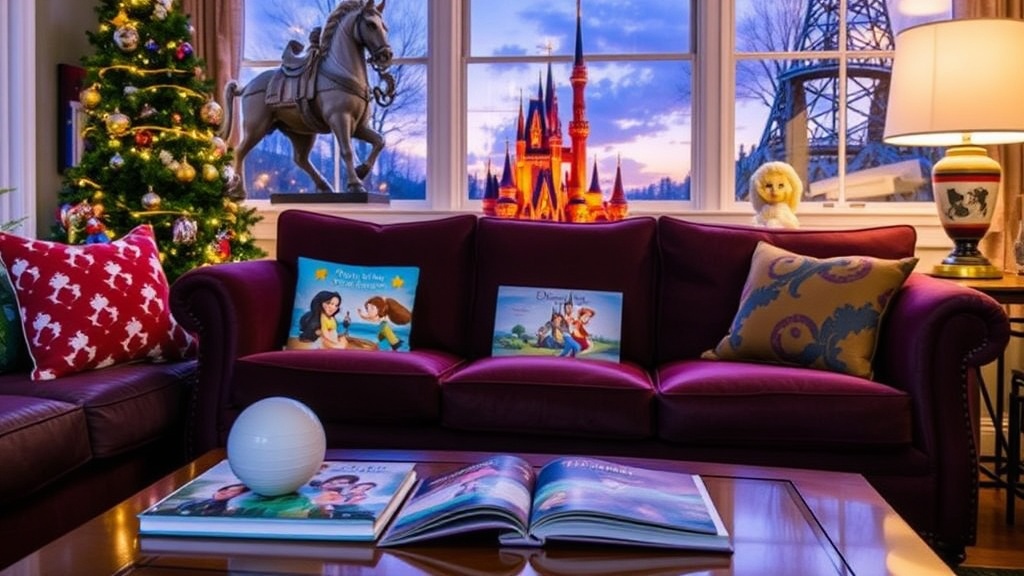
How to Create a Disney Themed Coffee Table Book Collection

A guest walks into a living room and notices a stack of bright, mismatched Disney books piled haphazardly on a coffee table. The colors clash with the room's aesthetic, and the books look like a collection of impulse purchases rather than a curated display. This lack of cohesion can make even the most beautiful home feel cluttered rather than themed. This guide provides a strategic framework for building a Disney-themed coffee table book collection that balances your fandom with high-end interior design, ensuring your collection looks like a curated gallery rather than a toy aisle.
Define Your Aesthetic Direction
Before purchasing a single volume, you must decide which "version" of Disney your home represents. A collection that mixes neon-colored character books with vintage 1950s art books will feel disorganized. Instead, choose a specific design language to act as your north and North Star.
The Vintage Archivist
This style focuses on the history of the studio. You are looking for books that highlight the Golden Age of animation or the technical evolution of the medium. Think about sourcing hardbound editions that feature concept art or historical documentation. This direction works best in rooms with mid-century modern furniture or traditional decor. If you want to understand the technical foundation of your favorite films, look into the evolution of Disney animation styles to find books that showcase the shift from hand-drawn cells to CGI.
The Modern Minimalist
Minimalism requires high-quality photography and clean lines. Instead of books with busy, character-heavy covers, look for "Art of" books or high-end photography books of Disney Parks. These books often feature expansive, landscape-oriented photography with minimal text on the spine. A coffee table book featuring the architecture of EPCOT or the lush landscapes of Pandora – The World of Avatar fits perfectly in a contemporary, neutral-toned living room.
The Whimsical Maximalist
If your home is a place of bright colors and high energy, your book collection should reflect that. This style allows for more character-centric books, such as those featuring specific franchises like Star Wars or Marvel. The key to making this look intentional rather than messy is to group by color or scale rather than just throwing them in a pile.
Select Books Based on Scale and Texture
A professional-grade coffee table display relies on "the stack." If all your books are the same height and thickness, your display will look flat and uninteresting. To create visual depth, you need to vary the dimensions of the volumes you collect.
- Oversized Folios: These are your "anchor" books. They are usually the heaviest and largest. Use these at the bottom of a stack to create a solid foundation.
- Standard Hardcovers: These sit in the middle of your stack. They provide the necessary height to transition from the large base to the smaller top books.
- Small Format Art Books: These are perfect for the very top of a stack. They add a sense of completion and can be used to "top off" a display.
Texture is another critical element. A collection of only glossy, laminated covers can look cheap under bright living room lights. Mix in books with matte finishes, linen-wrapped spines, or embossed gold lettering. A linen-bound book about Walt Disney's Imagineering provides a sophisticated tactile contrast to a glossy Disney Princess book.
Curate by Thematic Sub-Collections
Instead of one giant, disorganized pile, break your collection into smaller, themed groupings. This allows you to display different facets of your fandom across multiple surfaces in your home, such as the coffee table, a sideboard, or a bookshelf.
The Animation History Group
Group books that tell the story of the craft. This might include a book on the history of hand-drawn animation, a volume on the development of Pixar’s digital techniques, and a book on the concept art of specific films. This grouping is intellectually stimulating and serves as a great conversation starter for guests interested in film history.
The Parks and Imagineering Group
Focus on the physical locations. This could include high-end photography books of the Disney Cruise Line, architectural guides to the Disney Parks, or books specifically about the design of the themed lands. This collection connects your love for the movies to the physical experiences you have in the parks.
The Character and Lore Group
This is where you can be more specific with your interests. If you are fascinated by the darker side of Disney, you might curate a collection centered around the complex storytelling of the antagonists. For example, you could pair books about classic Disney villains with deep dives into their character arcs, similar to exploring why Disney Villains are often the most relatable characters. This creates a cohesive narrative within your decor.
Implement Professional Styling Techniques
Once you have gathered your books, you need to "style" them. A stack of books is just a stack; a styled collection is a design element. Use these three professional techniques to elevate your display.
The Rule of Three
When placing objects on or around your book stacks, work in groups of three. This is a fundamental principle of interior design. Place your largest book stack on the coffee table, then add a medium-sized object (like a ceramic tray or a sculptural piece) and a small object (like a candle or a small Disney-inspired trinket). The varying heights create a visual triangle that is pleasing to the eye.
Layering with Accessories
Don't let the books stand alone. Use accessories to tie the theme together without being "too much." If you have a collection of vintage Disney books, a brass magnifying glass or a vintage-style compass can act as a sophisticated accessory. If your collection is more modern and tech-focused, a sleek, minimalist metal tray can serve as a base for your books.
The "Spine-In" Method
If you have a book with a particularly beautiful cover art but an unattractive or loud spine, try the "spine-in" method. Turn the book so the cover faces up. This is a common tactic used in high-end staging to highlight the art of the book rather than the commercial information on the spine. This is especially effective for oversized "Art of" books where the cover image is a work of art in itself.
Maintenance and Rotation
A static collection can eventually become "invisible" to you. To keep your home feeling fresh, treat your coffee table books like a seasonal wardrobe. Every few months, rotate your collection. If it is summer, perhaps you bring out your bright, tropical-themed books related to the Disney Cruise Line or the Polynesian Resort. In the winter, you might swap them for more classic, cozy volumes related to classic holiday tales or the history of the Disneyland Railroad.
When rotating, always check for dust. Books, especially those with high-quality paper, can attract dust and moisture. Use a soft microfiber cloth to wipe down your books and ensure they are stored in a temperature-controlled environment to prevent the pages from warping or the covers from fading in direct sunlight.
Steps
- 1
Choose a Color Palette
- 2
Mix Art Styles and Eras
- 3
Layer with Themed Accessories
- 4
Arrange by Size and Height